

It’s Toasted
Segmentation and the Erosion of Mass Culture

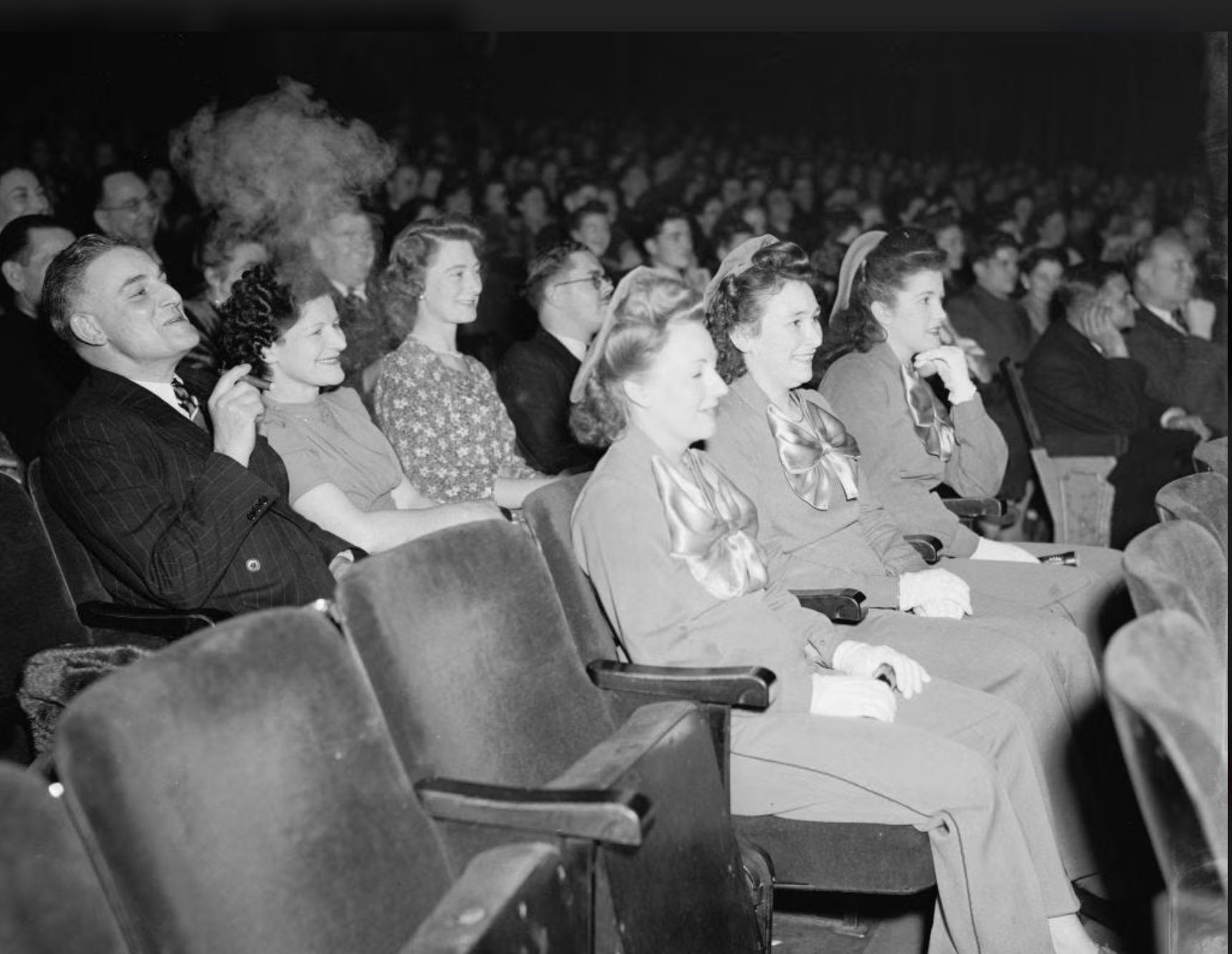
“Not being Nostradamus ... I have no faith in prophecies and do not make them. But I do not hesitate to say that I believe that the peak of the boom period in motion picture attendance has been reached and is passing to a more cautious ‘shopping’ attitude on the part of the public.”
Nicholas M. Schenck, chief of Metro-Goldwyn-Mayer (MGM), 1947
“Market segmentation … consists of viewing a heterogeneous market (one characterized by divergent demand) as a number of smaller homogenous markets in response to differing product preferences among important market segments.”
Wendell R. Smith, marketing executive, 1956
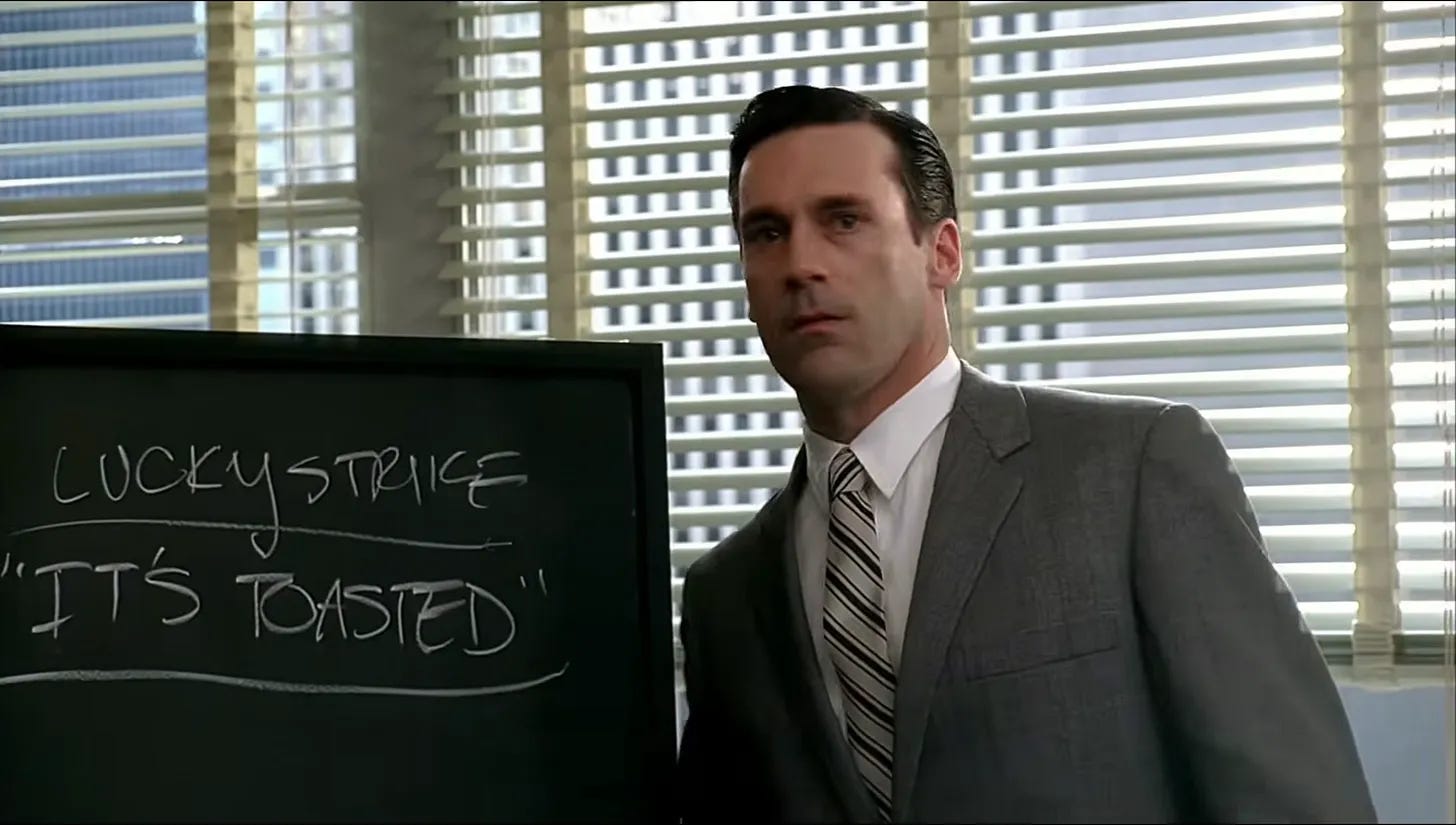
“It’s toasted.”
Don Draper, pretending to invent a Lucky Strike slogan from 1917 in 1960, 2007
The End of the Odyssey
In Book 10 of Homer’s The Odyssey, Odysseus and his crew almost make it back to their home island of Ithaca. They get so close to the island that they can see “men tending fires” on the shore. It’s at this moment that an exhausted Odysseus, who had been controlling his ship’s sail, relaxes and falls asleep.
But as Odysseus sleeps, his men start to talk. They grow envious of the oxhide bag that King Aeolus, the “steward of the winds” and ruler of a floating island, has given to Odysseus.1 Believing the bag is filled with booty, Odysseus’s men open it. Instead of finding treasure, they unleash an enormous gust of the sea’s winds, which blows them away from Ithaca and all the way back to Aeolus’s island. None of Odysseus’s men ever see their home again.
Christopher Nolan didn’t include this scene in his version of The Odyssey (2026). That’s unfortunate, because movie audiences refreshing their apps, desperate to get tickets to IMAX screenings of the director’s latest, might have sympathized with the Ithacans. Presently, there are only 41 theaters in the world capable of projecting The Odyssey “as it was meant to be seen,” in physical 70mm IMAX, with a 1.43:1 aspect ratio. Moreover, many IMAX screenings of The Odyssey are still sold out, unless you don’t mind sitting in the front row at 2:00 A.M. on a Tuesday. For both the ancient Ithacans and present-day film buffs, the object of desire can be seen but not reached.
Luckily for Universal, which financed The Odyssey’s staggering $250 million budget, and which likely spent about $125 million more to market the film, it’s pretty clear that most moviegoers don’t really care how they see the movie. At the time of this writing, The Odyssey has raked in more than $1 billion at the global box office (GBO), outearning Nolan’s 2023 smash-hit Oppenheimer ($983 million GBO). Other tentpoles are finding similar success, like Toy Story 5 (over $1.09 billion GBO), Super Mario Galaxy ($1.01 billion GBO), and, most recently, Spider Man: Brand New Day (which crossed $1.15 billion in GBO in its first week in theaters), as well as the small-budget horror movies Obsession ($475 million GBO) and Backrooms ($393 million GBO). These big numbers have led to predictable declarations that “we are so back,” the phrase employed by those hoping this year’s hits will shift movies back to the center of popular culture.
That hope, while understandable, is misguided. Movies, no matter how good or interesting, will never again occupy the center of popular culture. Studios could release a new The Godfather every day—which earned an estimated $2 billion GBO in its initial theatrical run, adjusted for inflation—and it wouldn’t bring the film industry any closer to our culture’s center.
Why? Because popular culture no longer has a center, at least not in the way it once did. As a medium, movies were born at the turn of the twentieth century, which was the same time that mass culture emerged. But mass culture no longer exists. While film will never become opera or ballet—which is to say, a form popular only among a relatively small group of devoted aficionados—it will likely become increasingly marginal.
That marginality was baked into the movies from the beginning. One of theatrical film’s greatest aesthetic strengths turned out to be one of its gravest economic weaknesses: you can’t interrupt a movie screening with a commercial. Hollywood has tried to find ways around this problem, but no matter what film executives have attempted, the feature film format has resisted advertising techniques that made other formats more profitable. Anyone honestly assessing Hollywood’s bid to reclaim the mass-cultural appeal it enjoyed in the mid-twentieth century can only come to one conclusion: it’s toasted.
The good news for Hollywood—which is also the bad news—is that it’s not the only industry that’s been burned. Capitalist innovation, and one of its chief handmaidens, the advertising industry, has toasted mass culture itself. What was once, for good and ill, a unifying feature of our society has fallen prey to technological developments that promise ever-greater profit at the cost of ever-greater cultural fragmentation. Mass culture’s odyssey from a key feature of social life to so much scattered wreckage is a long and tangled story, and it all begins at the movies.
Peak Cinema
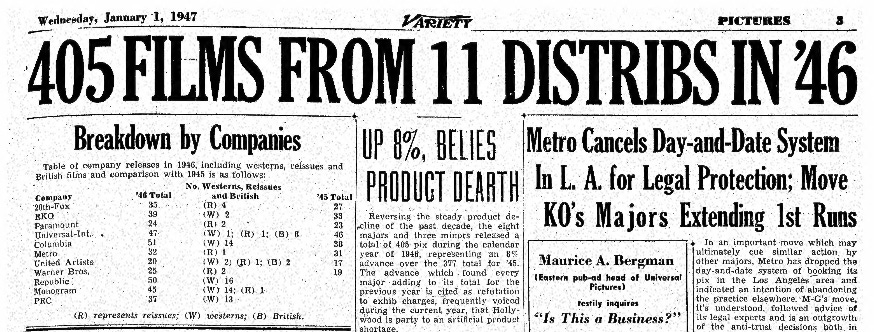
At its peak in the early 1930s, Hollywood produced true mass-cultural entertainment. Literally everyone went to the movies. In 1930, 90 million Americans—roughly 73% of the U.S. population—attended a movie theater every week to catch the latest western or romantic comedy or musical. That number dipped until 1946, when it again climbed to 90 million, where it stayed until 1948. But then, in 1949, the number of Americans who went to the movies every week started to decrease, and the decline has continued unabated.
For comparison, according to the Pew Research Center, in the summer of 2025, only 53% of Americans said “that they had seen a movie in theaters in the past year” (emphasis added). What in the 1930s and ‘40s had been a weekly ritual for three-quarters of Americans had, by 2025, become an annual outing for barely half of them.
What explains this decline? There are the obvious answers, each of which offers partial insight: the rise of television, which provided novel entertainment options that didn’t require repeated purchases; suburbanization, which dispersed the concentrated urban populations that used to walk or take the trolley to local movie palaces; and the Paramount Decrees of 1948, which forced the major film studios to divest themselves of the movie theaters they owned, dealing financial and organizational blows to the industry from which it has never fully recovered.
Combined, these explanations correctly identify some of the most important contingencies that led to film’s decline as a mass cultural product. But none of them, even when taken together, are wholly satisfying.
While the film industry has changed dramatically since its beginnings, the essential appeal of moviegoing has remained remarkably stable since the medium’s commercial inception: you get to sit in a dark room in front of a huge screen, forget the world, and give yourself over to a great story told in spectacular fashion.
This experience is still what attracts most people to the theater, even those who only visit once a year. It’s at least one of the reasons why Christopher Nolan is such an assiduous promoter not of movies in general but of theatergoing in particular. In an op-ed for the Washington Post written during the 2020 Covid lockdown, Nolan extolled the virtues of then-shuttered theaters. Movie theaters, he wrote, are “places of joyful mingling where workers serve up stories and treats to the crowds that come to enjoy an evening out with friends and family.” Without theaters, he lamented, his work as a filmmaker “can never be complete.” Nolan is correct: the theatrical experience is uniquely powerful and ought to be preserved not only for the industry it buoys but for its own sake.
While technological development, suburbanization, and antitrust regulation can take us some ways toward explaining why the movies are adrift, more force than that was required to shove a behemoth like Hollywood, with its monopoly on a quasi-religious experience, out of the cultural center. The only thing that could do that was capitalism. Or, more precisely, capitalism’s Trojan horse: advertising.
The Ad Game
The entertainment industry has always been embedded with the advertising industry. The first product placement in cinema occurred in the film Washing Day in Switzerland (1896), which was made with the participation of the Lumière Brothers and possibly shot by one of their camera operators, the appropriately named Alexandre Promio. The product was Sunlight soap, and the ad portrayed several women, you guessed it, washing clothes with the soap.
In fact, advertising provided an incentive for forward-thinking entrepreneurs to get involved in early cinema. The man behind the Sunlight soap spot was a Swiss businessman and philanthropist named François-Henri Lavanchy-Clarke. Initially, Lavanchy-Clarke had become intrigued by the Lumière Brothers’ cinématographe—a device that records, processes, and projects film—because he thought it could aid the deaf. Pretty soon, though, he realized the cinématographe’s real (i.e., moneymaking) potential lay in its ability to display advertisements. Lavanchy-Clarke was the Swiss representative for Sunlight soap, and it was he who was responsible for Washing Day in Switzerland, which was shot in his own backyard.
Advertising rapidly became common at the movies. Product placement remained part of the film industry’s revenue model. For example, William Wellman’s 1927 aviation epic Wings, the first film to win the Academy Award for Outstanding Picture, featured a shot of a Hershey bar, which was paid for by the company.
But there was a problem with this arrangement. Because movies were a mass cultural form, it was difficult for advertisers to ensure their wares got in front of the specific customers they wanted to reach. Sure, men were more likely to see westerns, women were more likely to see screwball comedies, and kids were more likely to see a Shirley Temple flick. But “men,” “women,” and “children” are pretty broad categories only somewhat useful to advertisers.
The degree to which advertising could bolster entertainment industry profits wouldn’t become clear until the perfect medium for mass marketing came into its own: television. When broadcast television started its inexorable rise in the 1950s, advertisers were one of its earliest and most significant beneficiaries. Most people are probably aware that early TV shows often had companies’ names in their titles, like The Colgate Comedy Hour, Goodyear Television Playhouse, and, of course, General Electric Theater, hosted by B-movie star and Screen Actors Guild president Ronald Reagan.
But there’s more to this story. Advertisers weren’t just purchasing the rights to put their names on shows. They literally funded, and therefore owned, the shows they sponsored. Companies, working with ad agencies, would produce a show and then either place products throughout it or write in ad breaks, during which actors or hosts would demonstrate how great their products were. Modern viewers might be familiar with the latter technique from The Truman Show (1998, dir. Peter Weir).
Though it might sound odd to us today, the big three TV networks—ABC, CBS, and NBC—didn’t actually own the programs they broadcast. In business, as in life, power matters, and in this arrangement TV executives had little power, which meant they had little control over shows’ content or which products were advertised.
Enter an NBC executive named Sylvester “Pat” Weaver. Weaver decided that the only way NBC could gain control over the medium of television was to produce and own what it broadcast. But how to make money off of advertisers, who were so crucial to the TV industry’s profits? This was where Weaver had a stroke of genius. As the Museum of Broadcast Communications explains, Weaver began selling advertisers “blocks of time” during breaks that interrupted NBC-owned programs. Weaver dubbed this “the ‘magazine concept’ of advertising, comparing it to the practice in which print advertisers bought space in magazines without exercising editorial control over the articles.”
This model, known as “participation advertising,” revolutionized the TV business. Selling short blocks of time embedded in network-produced shows turned the television advertising model on its head—and in the process gave networks direct control over every minute of their airtime. In one stroke, Weaver gave the network final say over programming and greatly diversified the number of advertisers to which he could sell.
As the latter suggests, participation advertising benefitted the innumerable companies that didn’t have the capital to fund their own TV shows but could afford to produce one commercial and buy a 30-second spot. Above all, this model provided advertisers with the ability to more precisely target ads to their desired demographics. Companies advertised household products during morning shows, because that’s when the housewives were at home. Got them right before they did the afternoon shopping. Toy companies advertised on the weekends, because that’s when the kids were parked in front of the tube and able to pester mom and dad to buy them Mr. Potato Head, the first toy ever advertised on TV. Insurance companies waited until the kids were in bed and mom and dad sat down to watch Tonight Starring Steve Allen before hawking their wares. And so on and so forth.
Television thus enabled networks to sell many more advertisers smaller chunks of time with the promise that their ads would reach exactly the audience they desired. Movies never allowed for such specific market segmentation.
Goofy Courtroom Movies
The story of the entertainment industry from the 1950s down until today is the story of increasing segmentation. The channel explosion that went along with the rise of cable TV in the 1980s encouraged ever-narrower demographic division. You could now advertise directly to people who loved sports (ESPN), science fiction (the Sci-Fi Channel), music (MTV), eating (the Food Network), or even the weather (the Weather Channel). Segmentation fueled the proliferation of cable channels, which grew from 28 in 1980 to 565 in 2006.
In the 2010s and 2020s, the emergence of television broadcast over the Internet on platforms like Netflix, Amazon Prime, and Disney+ eventually allowed even more accurate segmentation. Initially, the streaming services were organized around a false promise: pay less for more TV without commercials. While some streaming services, including Hulu, Peacock, Discovery+, and CBS All Access, were always supported by ads, the majority of streamers embraced a subscription-based business model, in which algorithmic analysis was used to develop, produce, and exhibit shows to specific demographics in the hopes that doing so would encourage audiences to sign up for a service.
The competition between streamers for eyeballs was a primary force behind “peak TV,” the term coined in 2015 by FX Networks head John Landgraf to describe the sheer number of shows being made in the high-streaming era. In 2010, 216 “original scripted TV series” were broadcast in the United States. By 2022, that number had risen to 600. These shows cost a lot of money, but streamers operated according to a classic Silicon Valley business strategy: lose some money today to become a monopoly, and make all the money tomorrow.
Nevertheless, by the early 2020s it had become clear that the subscription model was not bringing in the revenue necessary to eventually turn a real profit. Even before the “Great Netflix Correction” of spring 2022, when Wall Street told the streamers they needed to prioritize earnings, HBO Max had already introduced an ad tier. Then, after the correction, Netflix, Amazon Prime, and Disney+ followed suit. And all that data streamers had accumulated on users’ viewing habits? It allowed them to target specific ads to these same consumers. Most important for advertisers, they could now target different ads to different viewers watching the same show, dividing the audience into smaller and smaller subgroups.
Segmentation reached previously unimaginable extremes. Novel genre subcategories, from “wine and beverage appreciation” to “goofy courtroom movies,” were created to appeal to hyper-specific audiences. (What gets advertised to connoisseurs of goofy courtroom movies? A gavel that makes a fart noise when you bang it?)
Steven Spielberg’s 2002 film Minority Report famously featured a scene in which digital ads used retina scans to advertise to shoppers by name. Back then, this was a futuristic concept and a clever way to incorporate product placement into the movie. Today, it’s very nearly a reality.
Manufacturing Content
Even streaming television can’t compete with what will likely become the defining form of the twenty-first century: “user-generated content” exhibited on platforms like YouTube, Twitch, and Kick.
In 2025, for the first time in history, more people watched YouTube, the top user-generated content platform, than Netflix, the top streaming platform. According to Digital i, a British TV analytics company, “average daily usage per [YouTube] account rose from 87.2 to 99.1 minutes from 2024 to 2025, while Netflix dropped from 100.5 to 93.4.” Beyond that, Nielsen determined that, in 2025, a plurality of people—12.7 percent—watched TV shows on YouTube, more than any other platform.
This raises the question: What is YouTube? Is it producing mass culture? It’s true that masses of people watch popular creators like MrBeast (real name Jimmy Donaldson), whose channel has around 512 million subscribers, making it the number-one subscribed channel on YouTube by almost 200 million people. Creators like MrBeast also sometimes appear in mainstream content, including high-profile TV ads with brand partners like Salesforce.
MrBeast is a genuine star. But very few, if any, YouTube creators, even the most famous, have the kind of face and name recognition that A-list Hollywood actors had from the mid- to late-twentieth century.
What distinguishes today’s popular creators from TV and movie stars of the past is the targeted quality of their fame. The algorithms of user-generated content platforms are designed to serve consumers material similar to what they’ve already watched. This nudges even extraordinarily popular creators toward specialization and away from mass appeal. That’s why a wildly successful video gaming channel might be totally unknown to users who seek out cute cat videos. In contrast, in the 1940s, a dedicated Humphrey Bogart fan was undoubtedly aware of Spencer Tracy, to say nothing of Tom Cruise and Tom Hanks in the 1990s.
Film buffs who long for a return to the era of mass culture, in which movies—or even television shows—dominated the American imagination are bound to be disappointed. The decline of movies as a form is linked to the decline of mass culture as a mode of consumption. Instead of a mass culture, we have an algorithmic culture that atomizes the public into an audience of one and serves each of us personalized streams of advertisements.
No movie, no matter how successful, can ever compete with that.
Edited and fact-checked by Mark Sussman
Emily Wilson’s translation.
ok fam let's get some discussion going in the comments! if no one discusses I'll delete this :p
On the current trajectory of US political economy and culture it definitely tracks media will further atomize. In the abstract, do you think a shift in the political economy towards a more democratic socialist structure would have any effect on the trajectory/halt further atomization?